Hello [Vorname] [Nachname]
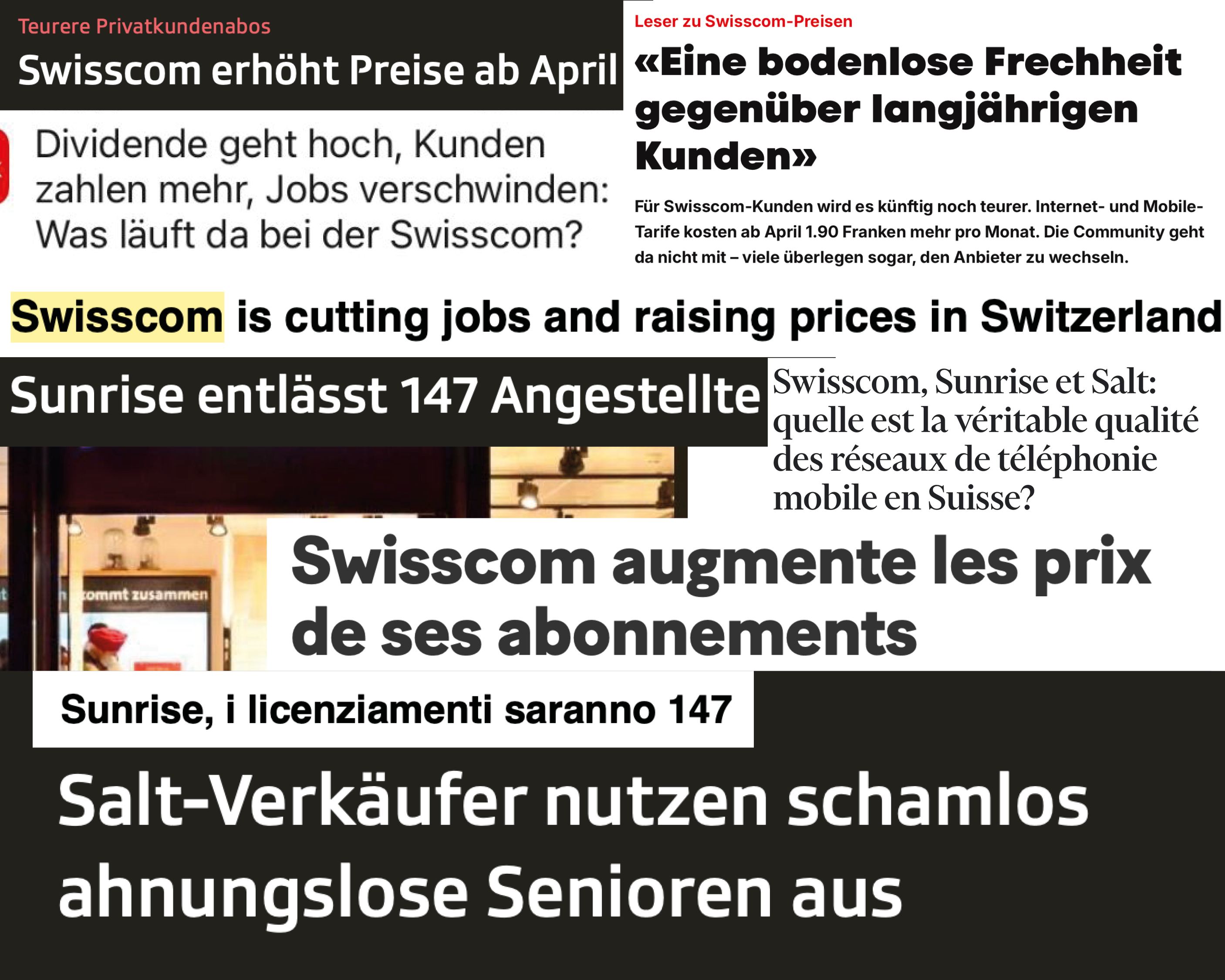
The negative headlines about the Swiss telecommunications industry continue unabated.
Sunrise is laying off 147 employees, while its CEO earns CHF 15.4 million a year.
Swisscom is increasing the price of mobile phone and internet subscriptions by CHF 1.90 per year.
Salt sold a dementia patient five (!) mobile phone subscriptions, including music boxes, in its flagship store in Bern.
Cablex, Swisscom's network construction subsidiary, is cutting dozens of jobs despite billions in profits.
All these measures have one thing in common: they're all about optimising returns.
They satisfy the expectations of shareholders, pay management bonuses and pamper employees who receive their appreciation solely via sales commissions. And all this is at the expense of society's most vulnerable members: customers without specialist knowledge, employees without professional alternatives – and ultimately at the expense of the general public and our economy.
The methods of the big three with ‘S’ in the industry are bringing the entire telecommunications industry into disrepute.
Decency and respect seem to have been lost in many places. The focus is no longer on customer satisfaction, but rather on ARPU and EBITDA.
In other words, at Swisscom & Co., customers are no longer customers, but net contributors. The real customers are the shareholders. As long as the dividends are right, management's job is considered done.
You may be thinking, ‘But Swisscom is owned by the state, isn't it?’ That's correct, at least 51% of it. But the dividends that the federal government receives, amounting to around CHF 580 million per year, are untouchable in Bern. Anyone who attempts to reduce this income is committing political suicide. One example: the motion by Council of States member Charles Juillard (JU), which sought to transfer responsibility for FTTH fibre optics to ComCom and regulate it, was so thoroughly torn apart in the relevant Council of States Committee for Transport and Telecommunications that Juillard ultimately withdrew his motion – virtually unnoticed by the media.
If ComCom were responsible for fibre optics and thus for cost-oriented wholesale prices, there would be significantly more price competition for broadband connections. Ultimately, everyone in Switzerland would benefit from this. For parliamentarians in Bern, however, Swisscom's dividend seems to be more important.
This means that Swisscom can charge CHF 1.90 more per subscription per month ‘just like that’. That doesn't seem like much, after all, ‘everything is getting more expensive’. A bit of a shitstorm in the media, and that's it. Hardly anyone notices that CHF 1.90 per month amounts to CHF 22.80 a year and means around CHF 160 to 250 million more profit per year for Swisscom shareholders.
That's why our latest blog is dedicated to the economics of the telecommunications industry.
When you purchase telecommunications services from companies that engage in such business practices, you are passively tolerating and supporting them. In other words, if you buy eggs from battery hens just because they are slightly cheaper than organic eggs from happy hens, you are contributing to the continued existence of battery farming.
The question is therefore a personal one: do you already have an ‘organic internet’ subscription, or are you still one of those who put profit maximisation above all other values?
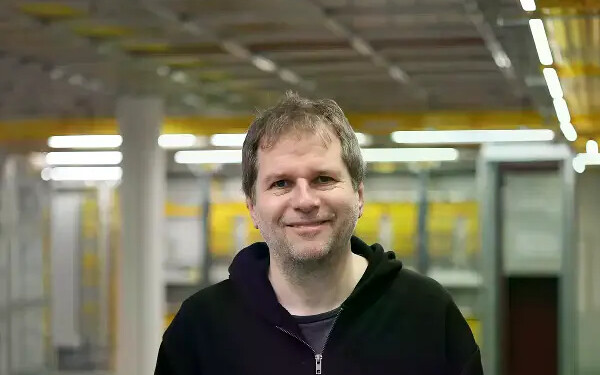
Fredy Künzler
CEO Init7
PS. Another unpleasant issue is keeping us busy. Overzealous public prosecutors in French-speaking Switzerland believe that, despite the lack of a legal basis, they can issue orders to providers at will to block unwelcome websites and domains. We resisted, which resulted in a fine of over CHF 6,000 for me as CEO of Init7. The whole story about political censorship can be found in the digital city magazine for Winterthur, WNTI.